The breed in the courtyard
The Andalusian horse behind the show
Where the Andalusian, or Pure Spanish Horse, comes from, why Philip II set up a royal stable in Córdoba, and what the breed was bred to do.
Reserve your seat at the stables ↗One horse, two names
The Andalusian is also called the Pure Spanish Horse, in Spanish Pura Raza Española, or PRE. It takes its name from Andalusia, in the south of Spain, and descends from the Iberian horses of Spain and Portugal. Wikipedia says it has been recognised as a distinct breed since the 15th century and that its conformation has changed very little over the centuries. Spain's tourism board calls the PRE the star of the Córdoba show.
Old roots
Cave paintings show that horses have lived on the Iberian Peninsula for 20,000 to 30,000 years. Many peoples left their mark on the Iberian breeds, among them Celts, Carthaginians, Romans, Germanic tribes and Arabs. The Iberian horse was identified as a talented warhorse as early as 450 BCE. DNA studies suggest the Andalusian and the Barb horse of North Africa crossed the Strait of Gibraltar and influenced each other's bloodlines.
Monks and pedigrees
Some of the earliest written pedigrees in recorded European history were kept by Carthusian monks, from the 13th century. Nobles gave monasteries the job of breeding horses because the monks could read and write. Andalusian stud farms formed in Carthusian monasteries in the late 15th century. They bred powerful, weight-bearing horses for the Crown of Castile from Spanish jennets, a blend of jennet and warmblood that was taller and more powerfully built than the original jennet.
The royal horse of Europe
The Iberian horse became known as the royal horse of Europe and appeared at many royal courts and riding academies. By the 16th century, during the reigns of Charles V and Philip II, Spanish horses were considered the finest in the world. Spain also used them as a tool of diplomacy, granting horses and export rights to favoured citizens and other royalty. Quality horses were owned mainly by the wealthy, even in Spain.
Philip II and Córdoba
Wikipedia records a royal decree of Philip II, dated 28 November 1567, that formalised the Spanish Horse and set up a royal stable in Córdoba. Horses bred there carried a brand of an R inside a crowned C. Sources date the founding differently, from 1567 to 1572, and every one places it in Philip II's reign. The stables are the same building that now houses the show, which is why the breed and the place belong together.
What the horse looks like
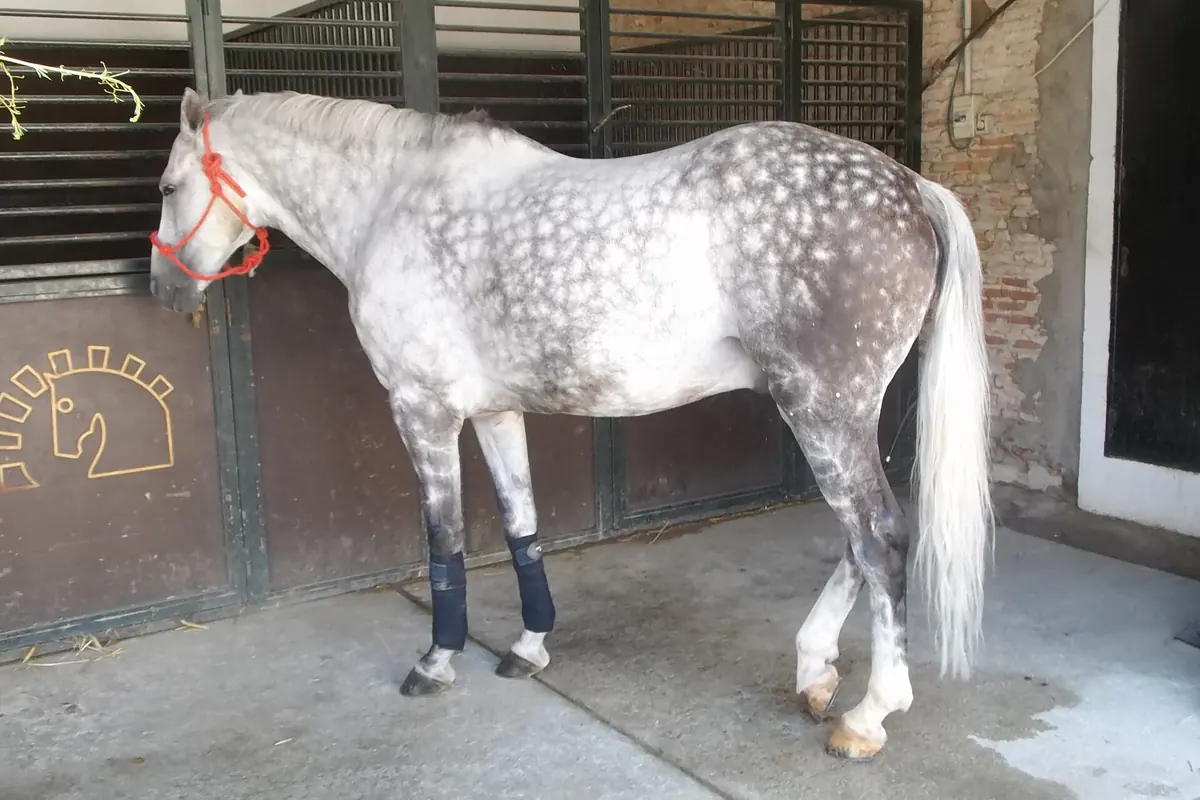
Andalusians are strongly built, compact and elegant, with long, thick manes and tails. Wikipedia gives an average height of about 156 centimetres at the withers. The most common coat is grey, though bay and other colours occur. The breed is known for intelligence, sensitivity and docility, and a movement that is extended, elevated and cadenced. Its arched neck and energetic gaits also made it a popular breed for film.
What it was bred to do
Over the centuries the breed has been selected for athleticism. Andalusians were used for classical dressage, driving, bullfighting and working livestock. Wikipedia counts them among the first horses used for classical dressage, and they still compete in dressage today. In 2010, more than 185,000 registered Andalusians existed worldwide. The three traditions named in the Córdoba show, dressage, doma vaquera and alta escuela, draw on that history of work and ceremony.
Across the world
Spanish horses were widely spread as a tool of diplomacy, and by the 15th century they were known across the Mediterranean and in northern Europe. The conquistadores of the 16th century rode them, and by 1500 they were established in studs on Santo Domingo. The Andalusian is closely related to the Portuguese Lusitano and sits in the ancestry of many warmbloods in Europe and of breeds in the Americas.
Sources